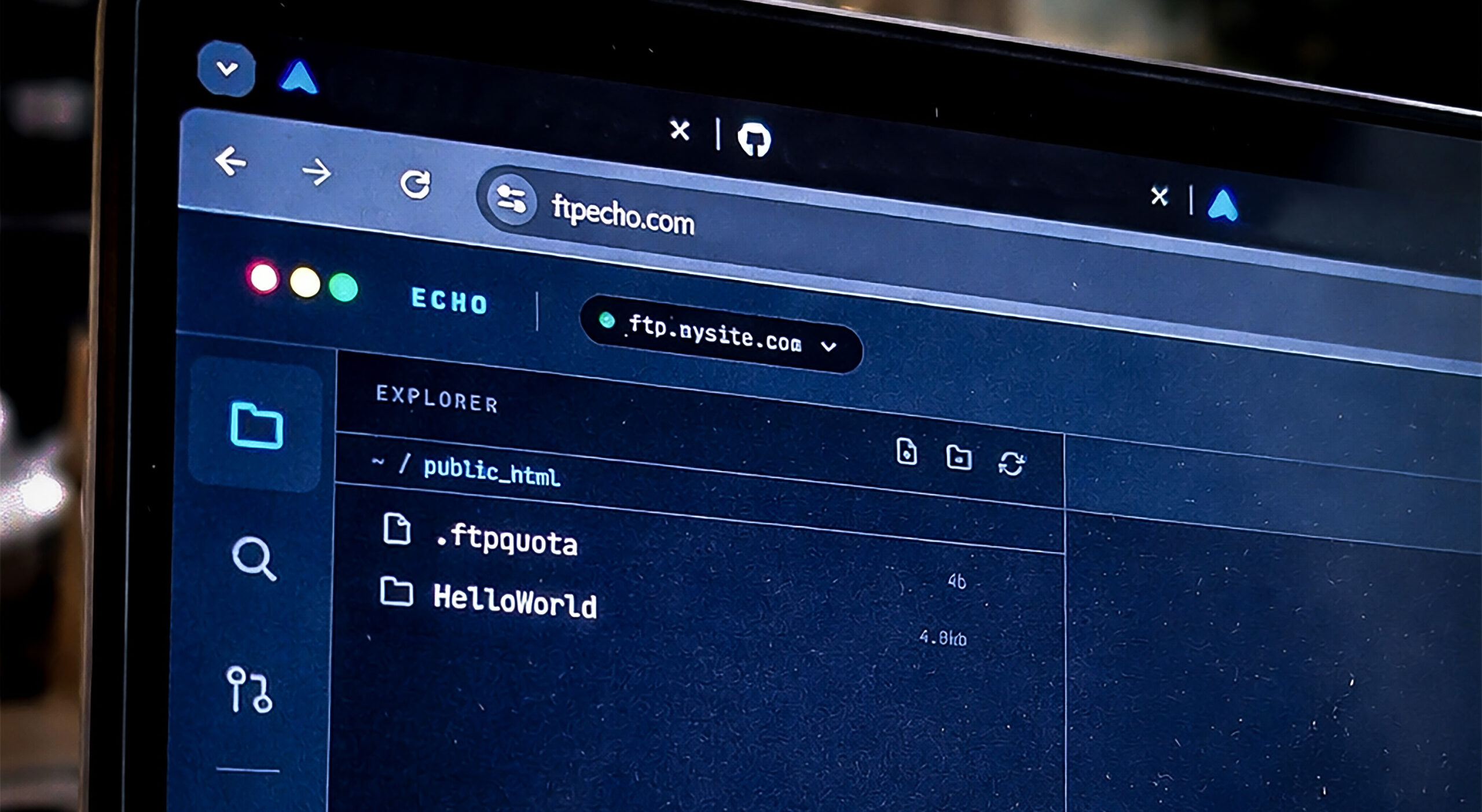
We just wrapped our first closed beta for FTP Echo, and honestly — it worked. Not perfect. Not polished. But real. The core system held up. First users got in, connected their servers, edited files live, and pushed changes. Most importantly, it didn’t feel like using something built in 2003.

That was the whole point. Why We Built It
Every FTP client we tried felt outdated. Clunky UI, old workflows, too many steps for things that should feel simple and fast. We kept coming back to one question: why does working with servers still feel like going backwards in time?
So instead of waiting for a better tool, we built one ourselves.
FTP Echo is a web-based FTP client designed for modern workflows, with features like:
- a slick dark interface
- live in-browser code editing
- GitHub sync
- multi-server management
- no installs, just open it in your browser and go
It’s the kind of tool we always wanted to use, but could never quite find.
What We Learned from Beta
The first beta confirmed something important. The idea is right, the direction is right, but now the details matter. What we want to improve next includes:
- refining the interface to make everything faster and more intuitive
- improving editor performance under real working conditions
- making GitHub sync smoother and easier to set up
- increasing stability across multiple connections and transfers
- removing the small friction points that only show up in daily use
Nothing dramatic. Just tightening the system where it counts.
What Comes Next
We’re now moving from closed beta toward public release.
FTP Echo is being built as a web service for developers who actually live inside modern workflows, not outdated ones. The goal is simple: create a cleaner, faster, better way to handle FTP in the browser, while also connecting it to tools developers already use today.
We also want to expand it with more useful features over time and shape it into something that genuinely fits real-world development work.
Final Thought
FTP Echo wasn’t built because we wanted to launch just another app. It was built because we were tired of using tools that felt stuck in the past. So we made the one we wanted to use ourselves. Now the first closed beta is done, the foundation is there, and the next step is making it even better for release.
We’re just getting started.